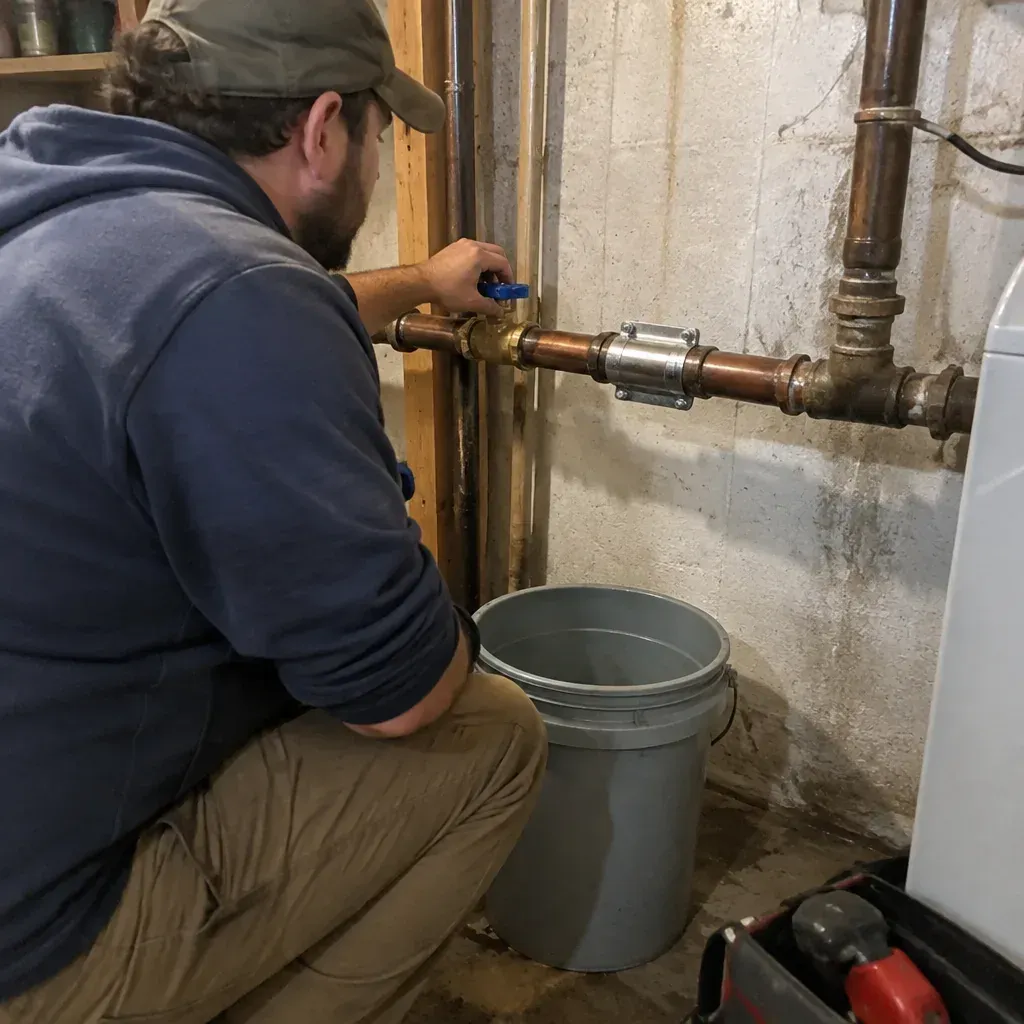
Pipe Repair Clamps for Elgin Homes
The clamp can limit water loss while the damaged pipe section remains in place for a temporary repair.
Damage that reaches a connection or removes part of the pipe wall may call for replacement. Treat it as temporary if the product is restricted to emergency use or the damage falls outside its stated limits.
Notice Where Water First Appears
In Elgin, look first for fresh discoloration, then droplets on an exposed line, then a narrow stream or spray. A spreading stain may mark water traveling from a break before it reaches the visible surface. Check whether the wet trace leads toward a pipe or fitting. Near Pottawatomie Park, Arcada Theatre, or Hotel Baker, the landmark does not explain the leak; the order and location of the signs help show whether water is still escaping.
A pipe repair clamp has a curved body, fasteners, and a gasket that presses against the pipe. The gasket’s contact area must cover the opening to form a seal. A small, localized hole may fit beneath that surface. A long split can extend beyond it, leaving a path for water. The clamp’s shape and sealing surface determine what damage it can cover; its appearance alone cannot show whether it will hold.
A water pipe clamp must be made for the pipe’s material and measured outside diameter. The gasket needs a sound surface around the opening to form a seal. In Elgin, a line in a ranch utility area may differ from one in a split-level, so the home style does not identify the pipe. Read the product’s material and size range before judging whether the clamp belongs on that line.
Trace the Wet Trail Back
Check the clamp’s listed diameter range against the pipe measurement, then note whether the body can sit squarely around it. A tilted band can press unevenly. The gasket needs contact across its sealing face, rather than pressure concentrated at one edge. If the pipe’s shape or position prevents that contact, the clamp may not seal even when its label includes the nominal pipe size.
A product’s pressure rating sets a limit for the conditions it is meant to handle. Compare that rating with the pipe system’s operating conditions before relying on the clamp. A band that feels tight does not establish that the product is suitable. A correct pressure rating cannot make a clamp suitable for damage at a pipe connection.
Look at the shape of the damage as well as its length. A pinhole or short opening may fall within the gasket’s footprint, while a split that runs past either edge may remain exposed. Damage beside a joint can also leave too little straight pipe for an even seal. The product instructions define acceptable damage and surface conditions; use those limits to judge whether a clamp is appropriate.
Watch How the Leak Behaves
Notice whether water returns after the line is back in use, or whether dampness spreads beyond the original mark. Those changes can mean the seal is not holding or water is escaping at another point. A dry patch around a clamp does not establish a lasting repair. Elgin homes near the Fox River, like other homes, need the pipe and product checked against their actual conditions rather than a location-based assumption.
Read the maker’s directions for approved uses, pressure limits, and required contact conditions. Some clamps are labeled for restricted or emergency service. That label makes the clamp a temporary measure, even if the visible leak slows. A returning drip, a widening wet area, or a product restriction is reason to treat the seal as limited. Do not infer long-term suitability from a quiet pipe alone.
Compare the Split With Clamp Limits
A clamp may not be suitable when the split extends beyond its sealing surface, the pipe is misshapen, or the break reaches a joint. Watch for water emerging past the gasket or a wet mark that grows after the clamp is in place. These signs show that the damage may not be contained by the seal. The product instructions also matter: a use outside its stated limits is not a reliable lasting repair.
If the opening is too long or the pipe is distorted where the gasket would sit, the damaged piece may need removal and replacement. A clamp cannot restore the missing pipe wall or correct damage that reaches a connection. Replacement parts must work with the system’s pipe and fittings. Clamps are intended for accessible water pipe, where the repair can be reached.
Check Clamp Fit and Coverage
- Match the manufacturer’s material and diameter range to the pipe; a clamp that merely wraps around it may still be unsuitable.
- Look at the full split, not only its center; damage past the gasket edge can leave an open path for water.
- Check the product’s pressure rating and use limits; an emergency-use label means the seal is temporary.
- Compare the clamp maker’s listed pipe material, measured outside diameter, pressure rating, and damage type before considering it for the leak.
- A bend, uneven pipe surface, or nearby fitting can prevent the gasket from contacting the pipe evenly across the damaged area.
- A long split, crushed pipe wall, failed joint, or leak extending past the gasket may require removal and replacement of that section.
Common Questions
Can a repair clamp seal a split in a pressurized water pipe?
It can seal some localized openings on an accessible pipe, if the gasket covers the damage and the clamp matches the pipe material, diameter, and pressure conditions. The pipe surface and shape must also allow even contact. Check the manufacturer’s stated uses before selecting a product. A clamp’s fit around the pipe does not by itself show that the opening is sealed.
How can I tell whether a clamp is only temporary?
It is temporary when its instructions restrict it to emergency use, or when the damage falls outside its listed limits. A leak that returns, a split beyond the gasket, or a distorted pipe also points to a limited seal. Damage at a connection or a missing section of pipe wall may call for replacement.
What pipe damage is too extensive for a repair clamp?
A burst pipe repair clamp is a fastened body with a gasket that presses around a pipe opening to limit escaping water. Its sealing area must cover the damage, and the product must suit the pipe and operating conditions. It is intended for accessible pipe; concealed damage may need access before its size and condition can be judged.
Share the Clamp and Leak Details
Describe whether water is still flowing and where moisture appears so the licensed pros we connect you with can assess the reported leak.
Call (847) 908-9187